Thursday, 14 May 2015

Extended Statment

Buddhism is an Asian originated religion or philosophy. The word Buddhism comes from the word Budhi, “to awaken”. It origins about 2,500 years ago when Siddhartha Gotama, known as the Buddha, was awakened (enlightened) when he was 35. Since then the religion has gained over 300 million followers, not just in Asia but it has expanded to a lot of other countries as more and more people are becoming Buddhist.  In Steve McCurry’s untold stores it mentions “Buddhist philosophy becomes more apparent when seen against the backdrop of western civilisation” (McCurry, 2013) I personally find this to be true Buddhism is more interesting than our western culture this could be because I was brought up in it.

I started this series because before the temple opened in my home town there were only churches and as I went to a catholic school we mainly were taught about Christianity and only skimmed over other religions, it was similar when I entered high school. I did read some information in books and online but experiencing it first hand is different.  Once I got a better understanding about the religion and got to know the monks and people who attend the temple I wanted to show that the monks don’t just meditate and that they are just human. They like to shop, mainly in charity shops, and they use technology. I wanted to show people what they actually do and not what people think they do. 

My series includes photos from meditation sessions, visits, ceremonies and events that the monks have played a major role in. I have not only photographed the meditation sessions but I have also joined in because I wanted to experience it for myself. The visits to the temple were mainly so that I could photograph the monks while they were just being themselves, either talking to each other or them taking their own photos. The ceremony was a wedding blessing which was a new experience for me, I documented what had taken place during the ceremony. The Songkran festival was an interesting event as it was New Year celebration with different way to welcome the new year.

I wanted the photo's to show Buddhism in a non biased way. I photographed what interests me and what I thought would show others what the religion is like. I am not a Buddhist but I do think the religion is one of the most believable, so photographing and interacting with them was interesting.

At the beginning of the series it seems to be more about the monks and their interactions with each other and others at the temple. As the series progresses it becomes more about the culture and what the Buddhist monks offer to the people who visit the temple.  As at the beginning of the series I was photographing the monks while they were either excepting offerings or talking with each over and visitors to the temple. Towards the end I was photographing more of what they do as Buddhist monks during ceremony and events.

Short Statment

Being a Buddhist 2015 

Being a Buddhist is a series based in a temple in a town in the north of England were the locals had not known much about the religion and culture before the temple opened, since the schools in the area tend to focus more on Christianity and only skimming over the other religions.  “Being a Buddhist” is to help people a better understanding of the religion and culture not the stereotypes. 

The series includes photo from chanting and meditating that take place every day during the morning and evening, visits to the temple and events such as the Songkran Festival which is the New Year celebration. 

Kelsey Avis started this series as a personal way to get a better understanding of a religion/culture that is interesting and different to what she is used to.

Saturday, 9 May 2015

Ideas for Desplaying Photos


At first I did not know how I would display my work. I thought of doing a small installment that represents an alter but I then thought that it may take away some of the attention from the photographs. I want the photos that I use in the exhibition to be linked to the temple in some way


I decided to use gold frames to display my photographs in this is because in the temple they use gold frames to symbolise well known monks. The gold frames are not all the same as they are different shades of gold, different patterns and the frames are different thickness's this is because I did not want them all to appear too similar because each of the photos in the temple are different. the frames do not take any attention away from the photographs.


 I don't know how I will be displaying my photo's but I have been playing around with how I can do this. The photos will be mixed and not in any sort of order. The actual display will most like be different from ether of these two ideas that you see above.


Example of Displays


The two photos below are examples of how I would like to display my photos. Both photos are from the Liverpool Tate Gallery that visited in February. I don't want them to be perfectly in a line because in the temple there are photos and shrines on the wall that are not the same size so my prints will be different sizes. 


Friday, 8 May 2015

Printing

Instead of paying a huge amount of money on prints. I decided to get my prints done from university. which in the end was a good idea since I had to re-size my work a couple of times so that they would not be odd sizes due to cropping. In the end I chose to have to the prints printed in A4 and A5. I decided to use matte paper as I thought that it would not reflect the light, which would interrupt people trying to view the photo's. The size of the prints do not have any significant meaning as I wanted it to be random like it would be in the temple.


Thursday, 7 May 2015

Chosen Photo For Exhibition

 The photo shows a monk sat on a cushion during a meditation, he is wearing a white blanket over his head which is quite different since the other monks were wearing orange blankets. The lighting it not bright. This made the white of the blanket appear to be darker with shadows that draw your attention.
I chose this photo for the exhibition because it is from the meditation shoot were I joined in, I enjoyed it a lot so I wanted to show how relaxing it is and thought that the photo of the monk sat on his cushions would show this. This is also what the Buddhist monks are well known for. 


The photograph to the right is of the head monk while he is chanting this like the previous photo is also from the meditation shoot. The monk has his hands together while chanting to himself, he is actually in front of the alter which you don't see except for the flowers. 

I chose this photo to be in my degree show  because I wanted to show the head monk while he was chanting. From my own experience hearing the chanting was moving and I ended up joining it can become even more relaxing when there is a large number of people joining in. I want people to see this, even though they can not hear the chanting they can still see it.


The photo on the left is of all four monks together they are sat of certificate that shows Than Thirasaks sort of promotion. The photo is not level and the monks are not in the center of the photograph. The monks all have serious looks on there faces. 

I chose to use this photo in my exhibition because the monks are the main focus when it comes to Buddhism. The monks are always learning and teaching so I thought it was perfect to have the photo of all four in the exhibition.


The photo to the right is of the bowls that are used to cleans the water that is then poured on to the tree in the garden. Your eyes are automatically drawn to the light reflection on cleanser as it is the lightest part of the photograph. The shadows are stronger in between the bowls but that is also because the colour of the table is quite dark, this makes the bowls stand out more. The bowls fill the frame of the photograph.

I chose this photo to be in the exhibition because it shows and object that I did not know about, I did not know what they were used for until after an offering to the monk they were used to cleansing the water before pouring in on to the tree.


This  photo is from the Songkrin Festival, it shows a woman pouring water into a shoot that leads to the statues of Buddha. This is to cleanse the image of Buddha for the new year. I lowered the saturation of the colour so that the shoot was not so bright also the silver cup was drawing the attention from the rest of the image. 

I chose this photo to be in the exhibition because it  shows how the Buddhist believe  that  cleansing a statue of the Buddha  will help them in the year to come.


 This photo is also from the Songkran festival, it shows a woman pouring scented water over the Buddhist statue. This is to cleans the image of Buddha for the new year. The main focus is the Buddha statue as it is darker then the rest of the image but the flowers around the neck and the damage to the back of the head do draw the attention.
I chose this photo to be in the exhibition as it is linked to the photo above and wanted to show another way to cleans the image of Buddha. It is also because I wanted to have an image of Buddha in the exhibition even though this is not an obvious image of him. 


This photo shows Than Thirasaks during the Magha Puja day, when the monks would usually walk through a village receiving rice as an offering but instead of walking through a village they were walking around the car park.Than Thirasaks stands out from the rest of the photograph because of how bright his orange robes are compared to row of people and the background. I love that he is not wearing socks outside even though it was freezing I will crop the photo so that it does not show the row of people.

I chose  this photo to be in the exhibition because I really enjoyed photographing this event, it was something completely different that I had not experienced before.


This photo is also from Magha Puja day. The photo is off all four monks while receiving the offerings. The colours draw you attention first with the warm colours that takes up most of the image. 

I chose this photo to be in the exhibition because I wanted a photo of all the monks during the ceremony but not just a staged photo but a photo of the monks being monks not chanting or meditating.


This photo is from the wedding blessing ceremony, it was during the cleansing part of the ceremony, this is when the family and friend of the bride and groom pour water over the couples hand to clean away their sins. The grooms hand is in focus compared to the brides which is in the background she is having water poured over her hands.

I chose this photo to be in the exhibition because I had never been been to wedding blessing that had a different ceremony. I thought that the washing away the sins of the couple to be an great way to start a marriage.


All the photos that I have selected to be in the exhibition were selected because they are ever of something that I have learned about or part of a new experience that I really enjoyed. I want to show others what I have learned and hope to get other people interested in other culture.


Tuesday, 5 May 2015

Meditation photographs

These are photos that I have selected from the meditation contact sheets. I have chosen them as they are ether something I have been wanting to photograph or they are a response to feedback.

fig 1

I wanted to get a photograph of the books that have the chants in so when I was able to get this photo of the book open and someone reading I had to photograph it what I think would have been better would be if the book was in Taiwanese not English, but this shows that the temple does take in to account the langue barriers. The photo i think is perfectly light as the page it light up so you can see what the chant is. what I like is that the hand is pointing out were the chant is at, this is because it is hard to follow so make sure you know were you is a great idea.

fig 2                                                 fig 3              

               fig 4            fig 5           
 I took a couple of photos during the meditation . The photos are dark as the curtains are closed and i wanted to keep that to show what happens during. Figure 4 reminds me of what Paul Hill had mention to me during a feed back "look at shapes and texture". That is what the image shows the shape of the monk while meditating.

fig 6

I love this photograph I wanted to get a photo of all 4 monks together and they love have their photo taken. The photos is warm and quite welcoming which is what the temple is mainly like. I know the monks are not the center of the photo but I still love this photo.

Meditation shoot-Contact sheets

This shoot is quite relaxed as it was during a evening meditation session. The first shoot I did was during the meditation but at the time their was only 2 monks in attendance, their are now 4 and I wanted to get some photos with all four of them. All the photos are quite dark as I did not use my flash as it would interrupt the meditation. You will notice that one of the monks are wearing a white blanket I did not ask why but I like that it was different from the others who have oranges blanket. This shoot is my last photo shoot with the monks as I will be selecting my photos for print soon.


Saturday, 2 May 2015

David Moore

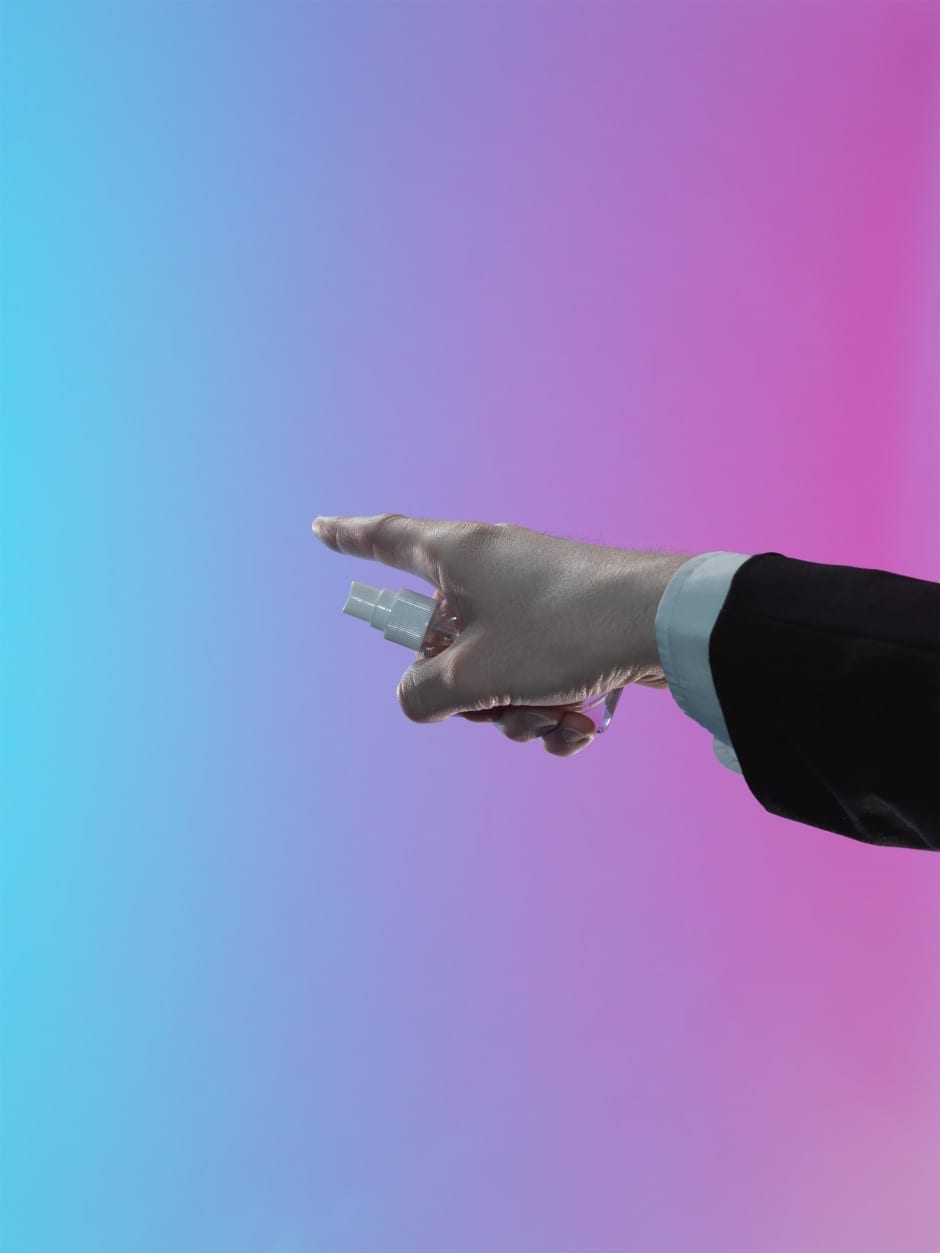
The velvet arena was mentioned to me because I was talking about how woman are not allowed to touch the monks, which I did not know about until I first went to the temple.The figure 1 was shown to me because of how the hand is highlighted which could represent that they could not touch this draws your attention.


fig 1

     fig 2                  fig 3        

Figure 2 reminds me on one of the images that I took while at the temple (look at image to the right)  Even though the lighting is completely different the subject is similar. I wanted to photograph the visitors reading from the books that have the chants in. figure 2 show the back of a man neck that is highlighted by the light. The light becomes the main focus of the photo highlighting the texture of the mans neck and his jacket. My photo does not have much light that is highlighting anything and it does not show much texture. figure 2 has shown me what a flash may have done to my photo.     

Dominic Hawgood- Under The Influence

Dominic Hawgood is one of the photographers that was mentioned to me by Matt during my feed back tutorial. He was mention to me as this series focuses on religion mainly Christianity, but not in the topical way he is looking at African churches around London. they are not your topical rituals, their are exorcisms conducted during live satellite sermons, these are then broadcast on giant screens. 

 
This series has a documentary and a studio feel to it as the photograph on the left looks like it could have been photographed in a studio with the colorful back ground and the subject being lite up perfectly. Were as the photograph on the right looks to be documentary as it looks like some one is reaching out to the woman, this could have been photographed in one of the churches but it also looks like it could be staged.
 

"Though he did immerse himself in the world of worship, his striking images also carry the heightened, unreal charge of either noir film stills (in his monochrome prints) or advertising campaigns, in his LED colour screens" (Sean O'Hagan,20/2/2015)

 Under the Influence is relevant my project as it give a different side to photographing religion. I am trying to learn more about the Buddhist temple and the monks who attend the temple I also like to think that I am photographing the monks and the temple differently I am not just focusing on the religion but on the monks and what they do.

http://dominichawgood.com/projects/

http://www.theguardian.com/artanddesign/2015/feb/20/dominic-hawgood-under-the-influence-evangelical-african-churches-london

Nicolo Degiorgis Hidden Islam

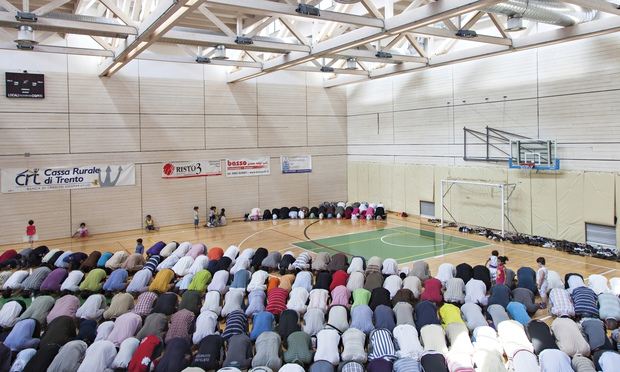
Consider these facts. In Italy the right to worship, without discrimination, is enshrined within the constitution. There are 1.35 million Muslims in Italy and yet, officially, only eight mosques in the whole country.

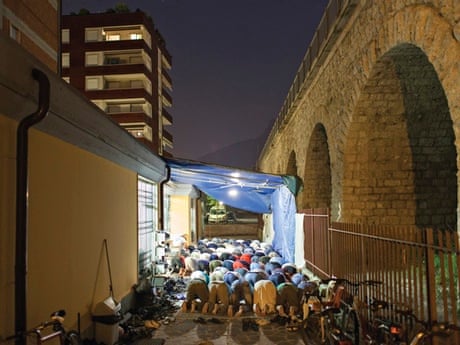
One consequence is that the Muslim population have accumulated a huge number of makeshift and temporary places of worship. These are housed in a variety of buildings including lock ups, garages, shops, warehouses and old factories.

This shortage of places to worship is particularly acute in north east Italy – where the photographer Nicolò Degiorgis lives – home to many anti-Islamic campaigns headed by the right wing party Lega
Nord. 


The photo above shows a large number of Muslims in a sports hall doing their worshiping. I can not tell if it is a morning or evening worship. The one thing that catches my attention is the number of people in the hall it shows that their are no mosque in the area. From what I can see is their are a small group of woman in the top corner of the hall this is because men and woman do not worship together.This is something that is slightly similar to the Buddhist temple even though the men and woman are allowed to chant and meditation together the woman are not allowed to touch the Buddhist monks

I found an articular about Nicolo Degiorgis's hidden Islam in the British Journal of Photography. It talks about how Italy had recognized Catholicism, Buddhism, Judaism and Mormonism are formally recognized religions in Italy but  Islam which is the nation’s second largest religion, is not.


The hidden Islam series is an influences as it show how another religion is adapting in a country that is not its origin. These people who are having to worship in makeshift places something I never thought about. The Buddhist temple previously was a pub which shows the Buddhist are finding them self's their own temples and adapting just like the Muslims are in Italy.


Feed Back- Matt

Today's feed back tutorial was with Matt who I have not talked about my project.Because of this I have some new thoughts to ponder for example:

What do I find interesting about the temple and why?
Look at the old in contrast to the new
What have I learnt, personally?
What am I trying to say about the temple?

I have thought about them but my answers always seemed to lead to another question which I was not ready for. 

I also talked to him about not have many practitioners to look at as research for this project.

One of the practitioners is Nicoló Degiorgis who has a series called Hidden Islam which is based in Italy were Muslims are having to have makeshift and temporary places of worship. These are housed in a variety of buildings including lock ups, garages, shops, warehouses and old factories.

Another practitioner was David Moore, he was mentioned to me because one of the things that I did not know about the Buddhist monk was that woman were not allowed to touch them. The series is called "The velvet arena" this was shown to be as because it can represent touch. The image to the left shows a hand being light up by the flash of the camera, which indeterminate to me no touching like the monks in the temple. 

Dominic Hawgood is another practitioner who was mention to me during the tutorial. Their are two series that I will look at, "Under the influence" (right) which is a study into the use of advertising within a specific church, and an exploration of the theatrical practice of deliverance that plays a central role in this belief system. " The conversation" is an investigation in to the niche Christian practice of ‘speaking in tongues’, considered a sacred language by some minorities.

I will be looking at the practitioners individual and will hopefully have thought about the question and can provide a answer.