Monday, 23 February 2015

Photographs from Shoot 3

 I really enjoyed this visit as I got to know the monks a little more while we were chatting. They spoke of their families and tried to teach me some Taiwanese which is quite hard. The photos below are from this visit and have been edited.


 The photo above are of one of the monks that returned from Tia land as the winter was too cold for him. He is having a conversation with a woman who has given him a offering while he is have a conversation he is writing a note this shows that the monks are like everybody else . The photo is quite busy with all the flowers and items that are on the alter saying that though your eyes are still drawn to the monk because of the bold orange colour .


In the two photos above you can see that Than Thirasak is excepting a gift from Jenny, who is a woman who cares about the monks, the gift is a photograph of him and his mother you can see how happy this makes him, the monks come over to the UK for a long period of time they don't get to see their families which would be hard.


I was advised by Paul to try to photograph the monks wearing clothes that you would not normally see them in so when I saw that Than Thirasak had gray socks on I thought that it was odd but England is a lot colder then Tia land. It really makes you think about how much the monk sacrifice even though they don't see it that way.


The monks had just returned from shopping which they enjoy doing from time to time especially in the charity shops. I was still focusing on the monk wearing clothes they do not normally ware when they returned wearing scarfs, hats, gloves and coats they looked so warm. I have to admit that the light from the window is a distraction.


In the photo above you see Phra Worapipat is giving jenny a gift that he fond in a charity shop, this shows how selfless the monks are they are very caring a kind to everyone. This brings me back to the quote in religion and anthropology, how Buddhist like to give gifts to earn merits but in this case I think it was just Worapipat being nice as all the monks at the temple are kind.


I originally wanted to get all the monk together but at first I could only get two of them to sit as the other monk had left the room. I really liked how formal the photos look. The lighting is perfect it highlights the right side of his face but it would have been better it the light was equal. The photo would have been symmetrical if the fan was not on the left side of the photo. in the future I would like to get a photo of all four monks in a formal photos as a focus for my exhibition.

contact sheet for 3rd Visit

My 3rd visit to the temple was mainly just a visit to the temple which ended in a nice little chat with some of the monks. I wanted to get a photograph of the monks in their robes but also it other clothing like socks but I ended up get a photograph of Tan Bank who is one of the younger monks in a coat and an umbrella which I loved. I also manages to photograph two of the monk sat together look very smart. The monks are not as formal I thought they would be they are just like any other young man except they are not rude they are polite and enjoy have a nice conversation with you. 


Friday, 20 February 2015

learning something new

I did not quite understand why monks tend to ware red or orange which is an interesting question but I then herd that the monks do not ware certain colours. So found this bit of information to be quite interesting.

While the color orange is not symbolic for Buddhist monks, the tradition of wearing orange has maintained prominence in the East. Contemporary monks wear synthetically dyed orange robes in honor of the memory of their ancient brothers in Southeast Asia. In other parts of the world, the robes worn by Buddhist monks are different colors. For example, Tibetan Buddhist monks wear burgundy robes. Also, white robes are often worn on special observance holidays.
The robe is significant to Buddhist monks because Lord Buddha also wore a robe in order to protect his body from the heat, cold and insects. Buddhist Studies also notes that Lord Buddha indicated that modesty, the covering of shameful body parts, is manifested through the robe. The robes are also meant to symbolize simplicity and the rejection of a materialistic lifestyle. Special rules dictate the size, length and manner in which the robe is sewn.

The last part that i high lighted was something I found quite interesting as monks tend not to have any materialistic objects as they don't need them. Saying that though the monk at the temple do like to visit the charity shop to buy little trinkets now and then.

Extra Photos

In my last feed back from Paul I was given some advise which was to look at what the monks use The monk and the visitors use a number of different objects during the ceremonies. With my last visit to the temple it was empty the monks had gone out for the day so I focused on some objects that I fond in the temple.

fig 1
Figure 1 is part of the alter that is in the main room in the temple I wanted to photograph parts of the alter I like how the flowers change and how the candles are always lite. I find the colours in the photograph is quite warm which is what the rest of the room is like. I wanted this photo to show how relaxing the temple is without show any of the monks or visitor.

fig 2
Figure 2 is of water offering bowls were people can pore water in to, it is then offer it to the tree that is linked to the temple when water is placed in the bowl it becomes pure. I like how you can see the reflection in the vase like object  it does draw the attention of the eye.

 
Fig 3
Figure 3 is a pile of the monks robes that are offered to the monks with food and water. The photo does not look like it is of robes more like pieces of fabric wrapped up. The colours of the robes made me think about id the monks every ware any different colours other then reds or oranges and why.


Thursday, 19 February 2015

Feedback with Paul Hill 2

During my second feed back I showed Paul some of my photos that I have taken over the last 2 weeks. He liked how the photo below that shows the back of the monk while chanting,  he said "look for shapes and forms, they can be quite interesting" this was because of the shape of the monk under the blanket. So I will look for shape and different forms in my photographs. 


He also mention to me to not just focus on the monks while they are praying or chanting but them as humans focusing on other aspects of their life as they don't just stay in the temple all day they go out or they are using laptop or their phones. Also to focus on smaller parts of the monks life like what they use and what they have for example do they ware socks? or what do they like?


Tuesday, 17 February 2015

Photographs From 2nd Visit

The photos below are the edited photographs from my 2nd visit to the temple. The photographs don't look to bright in colour which is what I wanted as I still think colour can interrupt the context of the photo. Saying that the photos would not look right in black and white as I said in the last photo editing post.


I really love how the monks interact with each other. when I was watching them they just act like young men when they are not chanting,meditating or excepting donations and prays.


While the monks were accepting the donations their is a CD playing which has a group of monks chanting which is quite relaxing.The monks interact with the visitors to the temple with ease and they always have a smile on their faces. in the middle photo you can see to the bottom left corner of the photo you can see a woman who is part of a group who are sitting talking to each over and the monks.


The monk ( I would say his name if I knew how to spell it) above always looks  relaxed. this was taken shortly after the after lunch and the short chanting and meditation be for the gifts from the visitors are given. I sat to the right of the room to photograph what I could see.


I really like photographing the monks interacting with different people. You can alway tell when the monk knows the person he is talking to as he becomes more animated by leaning forward to catch what they are saying . The woman in the photograph is one of the people who all the monks get along with quite well as she takes them out to other parts of the north east and I hope to join her some time in the future.


Sunday, 15 February 2015

2nd Visit-contact sheet

The contact sheets below are from when I visited the temple on the 15 February.  This was an interesting day as I was able to photograph the donations.What I love about some of the photos in this shoot was the interaction between the two monks and the interaction between the monks and the visitors to the temple. 


Saturday, 14 February 2015

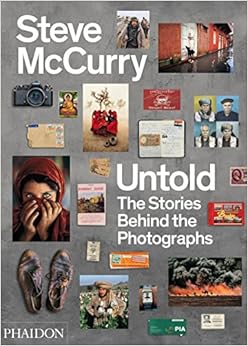
Steve McCurry - Untold Stories Behind the Photographs


Steve McCurry Untold spans 30 years of McCurry's career and includes fascinating ephemera from his travels: diary entries, photos of him at work and some of the 20-plus passports he's gone through over the decades… He manages to make the world seem enormous and quite small; exotic, and somehow familiar.


I chose to look at this book as Steve McCurry is one of the major influence of this project as he has photographed Buddhist around the world also this book has so many bits of information that I didn't know about 

" Their is something deeply appealing about Buddhist countries"Page 205

"I am endlessly intrigued by the way the monks live, by the way the Buddhist philosophy emphasizes compassion, as well as the iconography. The ethics and the aesthetics of Buddhism are melded in a unique way" Page 205

Both quote are by Steve McCurry describing why he finds Buddhism so interesting. they stood out to me while I was reading this chapter because I would feel the same this religion is unique and i cant help my self but want to travel to the  Buddhist countries.


The book will be influencing my project as it has given me an insight to what Steve McCurry thought of the Buddhist also on why he became so interested in the philosophy. The book has also given me some more ideas on what I may photograph even though my project is slightly different i hope to get dome photos that show what the Buddhist religion is like.


Thursday, 12 February 2015

Buddha Rising

Buddha rising is an article on the national geographic website. it is about how Buddhism is gain popularity around the world not only in the east but in western countries with practical ways to still the mind and find enlightenment as well. For example:

Photographed by Steve McCurry

While most temples focus on one tradition to impart the teachings of the Buddha, the Hua Zang Si Temple in San Francisco, California, integrates practices from all Buddhist sects. Housed in an old German Lutheran church, the temple is run by resident nuns whose daily activities include meditation and discussion of Buddhist teachings (above), in view of a 21-foot (6-meter) Amitabha Buddha, the Buddha of Infinite Light who is revered by sects who chant his name as part of the path to enlightenment.

Photographed by Steve McCurry

Bill Yoshin Jordan (above), founder and director of the Santa Monica Zen Center, knots his priest's robe in preparation for sitting zazen, a form of meditation. Jordan hangs an American flag in the center to emphasize that the tradition forming here is an expressly American Buddhism rather than a transplant from Asia. Buddhism is attractive to many Americans because it does not require a choice between religions—as one of the center's students says, "I consider myself a JewBu."


Reading this article and the photographs that are attached it made me realize how much Buddhism is growing and that its not just in England but in America as well. This article is relevant to my project because it is about how Buddhism is growing. The temple that has open in my home town is proof that the religion is growing.


Steve McCurry- Buddhist

One of my main influences with this project is Steve McCurry who is a world famous photojournalist.He has traveled around the world mainly to Asia to photograph the worlds conflicts and cultures.

fig 1

fig 2

Steve McCurry enjoys photographing Asian countries as he finds the different cultures in the different countries that make up Asia. What interest me the most about Steve McCurry's work is his passion for the Buddhist culture in every country he has visited he has photographed the Buddhist temples that are located their. He doesn't just photograph the monks and the temples but he photographs the history in the form of the fallen Buddha statues and monuments. If you look at figure 1  you can see that the Buddha has fallen but since it is clean it has been taken care of over the years but if you look at figure 2 it is completely different. In the destruction of the giant statues of Buddha committed by Afghanistan’s Taliban government in 2001, McCurry has seen and photographed such desecration. But, for him, this has proved the superiority of Buddhism.

Fig 3
In figure 3 you can see the Buddhist children are enjoying themselves with games. What interest me the most about this photograph is that the child on the left has a toy gun with a smile on his face, I find this interesting because Buddhist are mainly about peace and kindness to others. So the child playing with a gun is quite odd. The use of colour as usual when it comes to Steve McCurrys work makes the photos stand out more since the content of the photograph seems to be aiding the use of colour. The children who are wearing bright orange robes are the main focus against the dull blue wall and brown ground it just draws your attention to what the children are doing.


"With the Buddhists that I've encountered, there’s compassion, there’s a respect for all life, and there’s lots of peace and serenity. There’s a non-judgmental quality. If you look at all these statues and images of Buddha around the World he has this very loving, very compassionate atmosphere. There’s this real sense of wisdom and acceptance. There is this love that exudes that I think people find comforting. Also in most Buddhist cultures, women have a place of respect and very equal status."

A quite from a interview with Steve McCurry By C.B.Liddell
http://www.culturekiosque.com/art/interview/Steve_McCurry.html

Steve McCurry is a huge influence to me and my work as I find his photographs of other culture to be something that I hope to do in the future. His work will influence my final major project as from looking at some of his Buddhist photographs I have more ideas of what to look for when photographing the temple.

Wednesday, 11 February 2015

photographs from First visite

Some of the photographs needed to be edited so I did some experimentation with the fist 2 to see how it would work out as I like to use black and white photography but I thought that it would look better in colour as the temple is so full of warm colours.


The rest of the photos are in colour as I thought they would look better then they would in black and white as in colour you getter a better sense of what the temple is like, its warm and relaxing and and very welcoming 


The photo above is a monk sat down on the mat chanting. At the time this monk was ill and was keeping himself warm with blanket I was really happy that I got this photo as you could only tell he was a monk from the orange blanket which they always ware. The photo is dark but the colours are still warm. The shadows are strong, it makes the monks blanket stand out a lot more as it is is a strong colour compared to the shadows.


As you can see the photo above shows a monk in front of the alter chanting he is holding the book that the chants in if you look closely you can see their is a camera in front of him which he was using moments be for I took this photo. He was photographing the people behind him who were joining in with the chanting.


I wanted to get a photograph on the alter which during the evening chanting and meditation session was light up with the candles. What I really like about the photos is in the bottom left hand corner you see the light from a mobile phone which belongs to the monk.


Tuesday, 10 February 2015

First Visite- Contact Sheets

These photos are from my first visit to the temple, were I met up with Tony who help establish the temple in Runcorn he took me on a tour of the temple and gave me some interesting information about the temple and the items that are found inside. Afterward the monks were given their offerings which was followed by chanting. This was quite interesting at I have never really experience anything like that be for and it gave me some insight to what the monks do on a daily basis. Later I was invited to the evening chanting and meditation session the session.
The contact sheets contain the photos that I took from this visit some of the photos are darker as the room is poorly light for the meditation. 


I found the most interesting part of the photographs was the photo of one of the monks on his laptop with smile on his face. What I didn't get to photograph was the monk who was leading the chanting got up in the middle of it and started to take some photographs. One thing that I learnt from this visit is that woman are not allowed to touch the monks I was told this as I went to shake hands with one of the monks instead I put my hands together and bowed my head.


Monday, 9 February 2015

Tim Smith Asians in Britain


During the the early decades of the 1900s, small numbers of men from India, Pakistan and Bangladesh settled in Britain. Larger numbers arrived during and just after the Second World War, in response to the growing demand for labour. What were intended to be temporary visits became permanent, and the transient workers became settlers

.

Tim Smith’s thoughtful photographs explore this vital British presence. Delighting in individual distinctiveness, the photographs are also keenly alive to the binding power of community. Naseem Khan’s accompanying text uses key moments in her own history – from a child in a tiny Indian enclave in Birmingham to the present day – to illuminate the changes. Together they provide a picture of a shifting world where values collide and new identities are formed.


The book will influence my work as it is looking at the presence of asian in Britain and how the have integrated them selfs in to the British society and also becoming Britons them selfs, even through this book looks at this my own documentary work is looking at the Buddhist temple in my home town, how they have integrated themselves in to our society and how they are being welcomed.